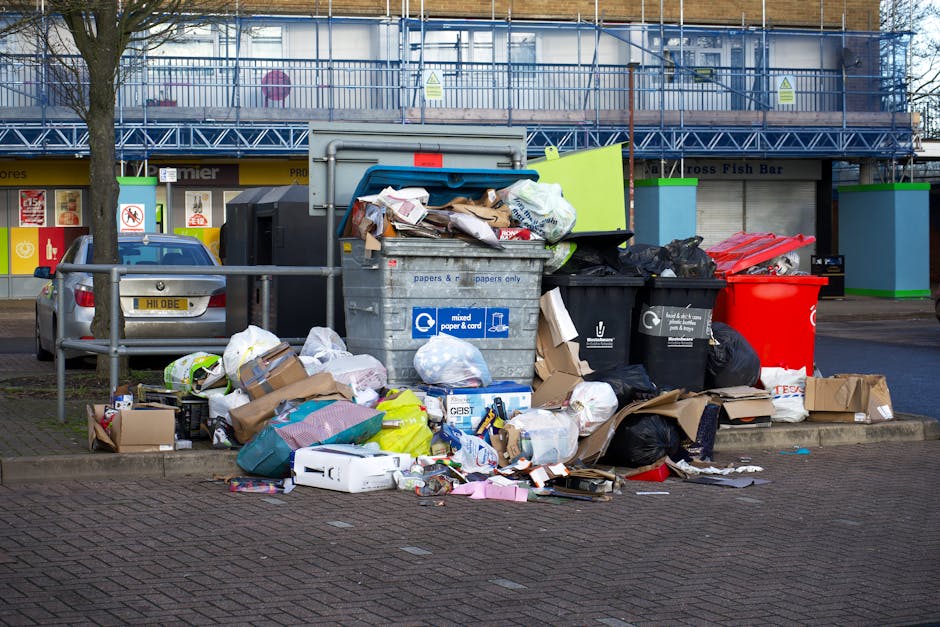
Clapham Common SW4 rubbish removal guide for residents
If you live near Clapham Common and the pile of unwanted stuff is starting to take over the hallway, the shed, or that one corner of the flat you keep pretending not to see, this guide is for you. This Clapham Common SW4 rubbish removal guide for residents explains how local rubbish removal works, what to expect, where people usually go wrong, and how to choose the most practical option for your home. Whether it is a single bulky item, a post-renovation mess, or a full property clear-out, the goal is simple: make the job less stressful and more manageable.
Let's face it, rubbish has a way of becoming urgent at exactly the wrong time. One minute it is "just a couple of bags," the next it is blocking the boot room, the balcony, or the front step on a damp Tuesday morning. This article walks you through the sensible choices, the usual costs and considerations, and the best ways to avoid last-minute headaches.
Table of Contents
- Why Clapham Common SW4 rubbish removal matters
- How rubbish removal works in SW4
- Key benefits and practical advantages
- Who this is for and when it makes sense
- Step-by-step guidance
- Expert tips for better results
- Common mistakes to avoid
- Tools, resources and recommendations
- Law, compliance, standards and best practice
- Options, methods and comparison
- Case study or real-world example
- Practical checklist
- Conclusion
- Frequently asked questions
Why Clapham Common SW4 rubbish removal guide for residents Matters
Clapham Common is one of those areas where space is precious. Flats are often compact, shared entrances can be tight, and parking is not always generous. That means rubbish removal is not just about getting rid of stuff; it is about doing it without disrupting neighbours, blocking pavements, or making a simple job turn into a messy day.
For residents, rubbish builds up in very ordinary ways. A wardrobe finally gives up. A sofa has seen one too many move. The garden border gets cleared in spring and suddenly there are branches everywhere. Or perhaps you are moving out and have a mix of furniture, bagged waste, broken bits, and things you are not even sure how to sort. A good removal plan saves time and, frankly, a fair bit of frustration.
It also matters because waste should be handled properly. Responsible disposal is not only about convenience; it is about keeping items out of the wrong place, reducing fly-tipping risk, and making sure recyclable materials are treated sensibly. If you want a broader overview of how these services fit together, it can help to look at rubbish removal alongside wider options such as waste removal and waste disposal.
Key point: in SW4, the best rubbish removal solution is usually the one that fits your access, timing, volume, and item type, not just the one that sounds cheapest at first glance.
How Clapham Common SW4 rubbish removal guide for residents Works
In practical terms, rubbish removal is fairly straightforward. You identify what needs to go, choose a suitable service, agree a collection time, and have the waste taken away for sorting, reuse, recycling, or disposal where appropriate. That sounds simple because it is simple enough - but the details matter.
For residents in and around Clapham Common, the process often looks like this:
- Assess the load. Is it a few bags, one sofa, a broken bed frame, or a full flat clearance?
- Separate special items. Furniture, builders' waste, garden cuttings, and household rubbish may need different handling.
- Check access. Think about stairs, narrow hallways, lift access, parking, and whether the crew can park close enough.
- Book the right service. Some jobs fit basic collection, while others need a fuller clearance approach.
- Prepare the area. Move small items aside, keep exits clear, and label anything that is staying.
- Collection and sorting. A professional team will remove the waste and route it appropriately. That may include reuse or recycling where possible.
If the job is mainly domestic clutter, a general rubbish clearance approach is often enough. For larger home jobs, you may need something closer to home clearance or house clearance. For a flat near the Common, flat clearance can be the better fit, especially where stairs and shared entrances are involved.
Truth be told, the tricky bit is rarely the lifting. It is the planning.
Key Benefits and Practical Advantages
There are several reasons residents choose a professional rubbish removal service instead of doing everything themselves. The obvious one is convenience, but there is more to it than that.
- Less time spent dragging waste around. No repeated trips to a disposal site, no queueing with a boot full of awkward junk, no guessing what fits where.
- Better for bulky items. Old sofas, wardrobes, mattresses, and appliances are much easier to deal with when someone else handles the heavy lifting.
- Safer and tidier. Broken wood, sharp metal, and heavy bags can be a pain to move safely, especially in tight stairwells.
- More suitable for mixed loads. If your rubbish includes furniture, garden waste, and odds and ends from a clear-out, a flexible service is more useful than a one-size-fits-all approach.
- Reduced stress during moves or refurbishments. A clear space makes everything else easier, from cleaning to decorating.
There is also the simple emotional benefit of seeing a room breathe again. A cleared hallway feels different. A decluttered spare room actually starts looking usable. One afternoon, one van, and suddenly the place feels less crowded. Small win, but a real one.
If your issue is one large item, such as a worn-out corner sofa or a heavy armchair, specialised help like sofa removal or furniture disposal can be especially practical.
Who This Is For and When It Makes Sense
This guide is useful for a wide range of residents in SW4, but it is especially relevant if your household situation involves limited storage, awkward access, or time pressure.
You may need rubbish removal if you are:
- moving home and want the property cleared before handover
- renovating a kitchen, bathroom, or bedroom
- replacing furniture or white goods
- decluttering after a long build-up of unwanted items
- clearing a garage, loft, shed, or storage cupboard
- tidying after garden work or seasonal pruning
- handling the contents of a rental flat between tenants
- dealing with office or business waste at home-based premises
For example, if you have just finished a weekend of serious decluttering and now there are boxes, broken lamps, an old desk chair and half a dismantled bed frame sitting in the landing, that is not really a "sometime later" task. It becomes a clearance task. The sooner it is handled, the sooner your space feels normal again.
For those with attached outdoor space, a garden clearance service may be the right match after hedge cutting, lawn edging, or a bigger seasonal tidy-up. For garages, there is also garage clearance, which is surprisingly helpful when a garage has quietly become a storage unit for broken bikes, paint tins, and "I might need this one day" boxes.
Step-by-Step Guidance
If you want the process to go smoothly, a bit of preparation makes a noticeable difference. Here is a simple, resident-friendly way to approach it.
- List what needs removing. Be specific. "Old furniture," "bagged household waste," "garden cuttings," and "one broken wardrobe" are much more useful than a vague estimate.
- Sort by type. Separate bulky items, loose rubbish, recyclables, and anything that may need special handling.
- Measure the awkward bits. If you have a mattress, wardrobe, or sofa that has to pass through narrow stairs or a tight hallway, measure it. Not because anyone likes measuring tapes, but because it prevents surprises.
- Check access and parking. In Clapham Common, access can be the difference between a fast job and a frustrating one. Note lift availability, floor level, entry codes, and where the vehicle can safely stop.
- Choose the right service level. A few bags may only need collection, while a whole-property clear-out might need a broader waste clearance or waste collection option.
- Book a convenient time. If possible, choose a slot that avoids peak household chaos. Early afternoon often works better than "just after everyone gets back and the hallway turns into a bottleneck."
- Keep the load accessible. Put waste in one area if you can do so safely. It speeds things up and reduces back-and-forth.
- Confirm what is included. Ask whether lifting, loading, and disposal are included, and whether there are any item restrictions or access notes.
A good service should make the process feel calm and obvious. If it feels confusing at the start, ask more questions before the collection date. That is not being difficult; it is being sensible.
Expert Tips for Better Results
Here are the small things that can save you time and money. These are the bits people often skip, then regret later.
- Be honest about volume. Underestimating the amount of waste is one of the easiest ways to create delays. If in doubt, round up.
- Keep mixed loads organised. If you can group furniture, bagged rubbish, and builders' waste separately, it helps the crew work faster.
- Protect shared spaces. In flats or maisonettes, clear your route before collection day. Stairwells and door frames get knocked surprisingly easily.
- Think about reuse. Some items may still have life left in them. Even when an item is no longer useful to you, it may still be suitable for recovery elsewhere depending on condition.
- Plan around wet weather. London weather being London weather, a dry collection window is handy if waste is being carried through an open area.
- Use a service that matches the job. A single sofa does not need the same setup as a full office clear-out. Keep it proportionate.
One small but useful habit: take a quick photo of the waste area before collection. It is not glamorous, but it helps you remember what needed to go if you are sorting several rooms. Slightly unromantic, yes. Very practical, also yes.
If the project is connected to decorating or a knock-through, builders' waste may be more relevant than standard household rubbish. For businesses based at home or nearby, business waste can be worth considering where the contents are commercial rather than domestic.
Common Mistakes to Avoid
Most rubbish removal problems are avoidable. They are usually caused by one of a handful of common mistakes.
- Mixing everything together without checking. Not all waste should be handled the same way. Mixed loads are normal, but some items need extra attention.
- Leaving items in awkward places. If the team has to navigate obstacles you could have moved in advance, the job takes longer than necessary.
- Forgetting access details. Entry codes, floor numbers, parking restrictions, and lift issues matter more than people expect.
- Assuming every item is accepted. Some waste streams have restrictions. It is always better to ask first.
- Choosing only on price. Cheapest is not always best if the service does not fit your actual waste type or access conditions.
- Waiting until the last day. This is a classic move. The pile gets bigger, the stress gets louder, and the hallway starts looking like a mini depot.
Another easy mistake is treating a flat clearance like a simple bin-emptying job. If there are multiple rooms, bulky items, and extra lifting involved, the right service is usually a more complete clearance rather than a basic collection.
Tools, Resources and Recommendations
You do not need much equipment to prepare for rubbish removal, but a few simple tools help a lot.
- Strong refuse sacks or heavy-duty bags for loose waste
- Label stickers or tape to mark what stays and what goes
- Measuring tape for bulky items and tight doorways
- Gloves for sorting sharp, dusty, or grimy items
- Phone camera for quick reference photos
- Basic trolley or sack barrow if you are moving safe, manageable items internally before collection
In terms of service recommendations, choose the option that best reflects the actual contents of the load. For example, a living-room refresh might be mostly furniture, while a cleared-out cellar may be more mixed and dusty. A garage loaded with old tools and broken storage units is its own thing entirely, and not every provider will treat it the same way.
You may find it useful to compare waste collection with rubbish collection. They often overlap in everyday language, but residents sometimes use them differently depending on whether the job is a small pickup or a broader clear-out. That distinction matters when you are describing your needs.
For residents who want to understand the company behind the service, the about us page is worth a look. And if you are ready to ask something specific, the contact us page is the obvious next step.
Law, Compliance, Standards, or Best Practice
Rubbish removal is not just a practical task; it also sits inside a broader set of UK waste-handling expectations. You do not need to become an expert in environmental rules to book a collection, but it helps to understand the basics.
Here is the plain-English version:
- Waste should be handled responsibly. Items should not simply be dumped anywhere convenient.
- Reputable operators should manage disposal properly. That means sorting waste where possible and using legitimate routes for disposal.
- Mixed household waste and bulky items may be treated differently. Some materials are easier to recycle or recover than others.
- Residents should avoid informal disposal arrangements. If a price looks too good to be true, or someone cannot explain where the waste goes, pause and ask more questions.
Best practice for residents is straightforward: describe your waste clearly, ask what happens to it, and make sure you are comfortable with the process. That does not mean interrogating anyone like a detective. It just means being careful. Sensible careful.
If you are managing a larger property or clearing multiple rooms, services such as waste removal and waste disposal should be discussed with the provider so you understand how the material will be handled. For residents with a lot of personal belongings, it is also worth checking whether home clearance or house clearance is more appropriate than a simple rubbish pickup.
If you are unsure, ask for clarity before the work starts. Clear communication is usually the difference between a smooth day and a slightly chaotic one.
Options, Methods, or Comparison Table
Residents in Clapham Common usually choose between three broad approaches: DIY disposal, local collection, or a fuller clearance service. Each has its place.
| Method | Best for | Strengths | Drawbacks |
|---|---|---|---|
| DIY disposal | Very small amounts of waste and people with time, transport, and lifting ability | Feels direct, may suit tiny jobs | Time-consuming, physically awkward, parking and transport hassles |
| Rubbish collection | Single loads, bagged waste, or a modest number of items | Convenient, quicker than doing it yourself | Less suitable for larger mixed clearances |
| Full clearance | Flats, houses, garages, offices, and multi-room clear-outs | Handles more volume, less stress, good for bulky items | Can be more involved to arrange if access is complex |
For many SW4 residents, the sweet spot is somewhere in the middle. Not every job needs a full property clearance. But not every job is just "a couple of bags" either. That is why people often end up choosing a service like rubbish clearance or a more specific route such as furniture disposal. It depends on the shape of the waste, not just the amount.
Case Study or Real-World Example
Here is a realistic example from the kind of situation many Clapham Common residents face.
A tenant in a two-bedroom flat near Clapham Common had a mix of items after moving out: a bed base, two chairs, four bags of household rubbish, a small bookshelf, and a few broken kitchen bits that had been waiting in the cupboard for months. The stairwell was narrow, the property was on an upper floor, and the move-out deadline was the next morning.
The most sensible choice was not to split the job into several small trips. Instead, the load was assessed as one mixed clearance, with the furniture and rubbish handled together. The tenant prepared by clearing the path, separating anything personal, and keeping the waste near the entrance. The result was a faster, tidier collection and a much calmer handover the next day.
That kind of job is very common. Nothing dramatic. Just everyday life catching up with a flat. A little bit of planning made all the difference.
A similar logic applies to larger jobs such as office clearance or garage clearance. If the waste is mixed and access is limited, a more complete service often saves time overall.
Practical Checklist
Use this quick checklist before collection day. It keeps things simple and avoids the usual surprises.
- List every item or pile that needs removing
- Separate items you want to keep
- Measure any large or awkward furniture
- Check access, stairs, lifts, and parking
- Identify whether the waste is household, furniture, garden, or builders' waste
- Move loose items into one sensible area if safe to do so
- Make sure hallways and entrances are clear
- Confirm collection timing and any arrival instructions
- Ask about disposal handling if you want extra reassurance
- Keep pets and children away from the working area on the day
Quick reminder: if the job is larger than you first thought, it is usually better to say so early. Nobody minds a bigger description. They do mind surprises at the front door.
Get a free quote today and see how much you can save.
Conclusion
Clapham Common SW4 residents need rubbish removal that is practical, reliable, and suited to local living conditions. Tight spaces, busy schedules, and mixed loads are all part of the picture. The best approach is to match the service to the actual job, prepare the waste properly, and choose a provider that can handle the collection without adding stress to your day.
If you remember one thing from this guide, make it this: the right rubbish removal plan is the one that saves time, keeps your home manageable, and gets the job done cleanly the first time. That is what most people want, really. Nothing fancy. Just a clear space and one less thing to think about.
And once the clutter is gone, the place feels lighter. A bit quieter too. Funny how that happens.
Frequently Asked Questions
What is the best rubbish removal option for a flat near Clapham Common?
For most flats, a service that handles loading, lifting, and disposal is the most practical choice. If the job involves furniture, multiple rooms, or stairs, a flat clearance approach is often better than a simple pickup.
How do I know whether I need rubbish removal or full clearance?
If it is a small amount of bagged waste or one bulky item, rubbish collection may be enough. If you are clearing several rooms, a garage, a whole flat, or a mix of furniture and household items, full clearance is usually the better fit.
Can bulky furniture be removed from SW4 flats with narrow stairs?
Yes, in many cases it can, but access details matter. Measure the item if it is large, and make sure the route is clear. Sofas, wardrobes, and bed frames are common examples where planning helps a lot.
What should I do before the collection team arrives?
Keep the waste together, clear the route, move personal items aside, and make sure access details are ready. A few minutes of prep can save a lot of back-and-forth on the day.
Is garden waste handled differently from household rubbish?
Often, yes. Garden cuttings, branches, soil-heavy material, and mixed outdoor waste may be treated differently from ordinary household rubbish. If your job includes outdoor tidying, a garden clearance service is worth considering.
Can builders' waste be collected from home renovation projects?
Yes, provided the waste type is appropriate for the service. Rubble, packaging, offcuts, and renovation debris often fall under builders' waste rather than everyday rubbish.
How do I prepare furniture for disposal?
Remove personal items, empty drawers where possible, and dismantle items only if it is safe and genuinely useful. For awkward pieces, leave them intact and explain the access issue instead. Sometimes less fiddling is better.
What happens to the rubbish after collection?
That depends on the waste type and the provider's handling process. Good practice is to sort suitable items for reuse or recycling where possible and direct remaining waste to the correct disposal route.
Is rubbish removal suitable for landlords or tenants between lets?
Yes. End-of-tenancy clear-outs are very common, especially where the property has leftover furniture, general rubbish, or items left behind after a move.
How do I avoid surprise issues on the day?
Be clear about what needs removing, mention awkward access in advance, and ask any questions before booking. Most problems come from missing details, not from the work itself.
What if I only have one item to remove, like a sofa or mattress?
Specialist item removal can be a neat solution. If it is mainly one large object, a service such as sofa removal or furniture disposal is usually more efficient than arranging a bigger clearance than you need.
Why should residents in Clapham Common care about proper waste disposal?
Because it keeps homes safer, avoids clutter building up, and supports responsible handling of unwanted items. In a busy area like SW4, a sensible disposal approach also helps prevent mess and stress spilling into shared spaces.